
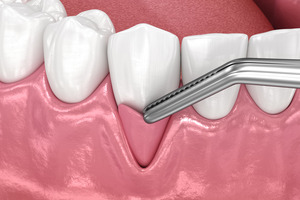
If gum disease goes untreated for a long time, it can result in gum recession. This condition is characterized by the gums pulling away from the teeth, revealing their roots and leaving them vulnerable to attacks from harmful bacteria. Gum recession can be a serious problem, but fortunately, there’s a way for your periodontist to reverse its effects and restore your oral health: gum grafting.
What Exactly is Gum Grafting?
Gum grafting involves transplanting tissue to the areas of your mouth where gum tissue has been lost or is thinner than normal. Said tissue is typically taken from your own mouth, although it can also be provided by a donor. Once the tissue has been transplanted, it will gradually integrate with your gums.
Why is Gum Grafting Needed to Treat Gum Recession?
Gum recession can lead to serious oral health consequences when left alone. The roots of your teeth aren’t covered by enamel, so they aren’t as well-protected from decay. As such, if they’re exposed, your risk of developing cavities will rise significantly. Furthermore, tooth roots tend to be very sensitive to temperature, so if they come in contact with hot or cold foods and beverages, you’re likely to experience significant discomfort.
Unfortunately, gum recession is not an issue that will go away by itself over time. When gum tissue is lost, it’s gone for good; it lacks the means to regenerate the way your skin does. As such, if you’ve experienced gum recession, gum grafting is likely your best option for addressing the problem and ensuring that the roots of your teeth are properly protected.
What Can You Expect During Gum Grafting?
There are various kinds of gum grafting that might be performed depending on your unique situation. For example, during a connective-tissue graft, a small flap is created in the roof of your mouth so that the necessary tissue can be removed and transplanted. On the other hand, a pedicle graft involves making a flap in your gums and stretching it over to cover your tooth roots. Your periodontist will walk you through the specifics of your gum graft so that you have an accurate idea of what to expect.
During the procedure, a local anesthetic will be used to numb your mouth. As such, there should be little to no discomfort during the treatment itself. Your mouth may be somewhat sore and sensitive in the days following the procedure, but you should be able to manage these symptoms with over-the-counter pain medication.
In short, gum grafting is a reliable way to address gum recession and avoid further oral health issues. If you suspect that your gums have receded, don’t be afraid to speak to your periodontist to find out whether gum grafting is right for you.
About the Practice
At Attleboro Dental Group, our team includes multiple oral health experts, including a board-certified periodontist. This allows us to offer a wide range of specialty services without needing to refer our patients to a separate practice across town. We’re proud to be able to offer gum grafting for individuals with receding gumlines. If you suspect that you’ve been experiencing gum recession, you can schedule an appointment with our team at our office in North Attleborough by visiting our website, using our online booking tool, or calling (774) 331-0260.