
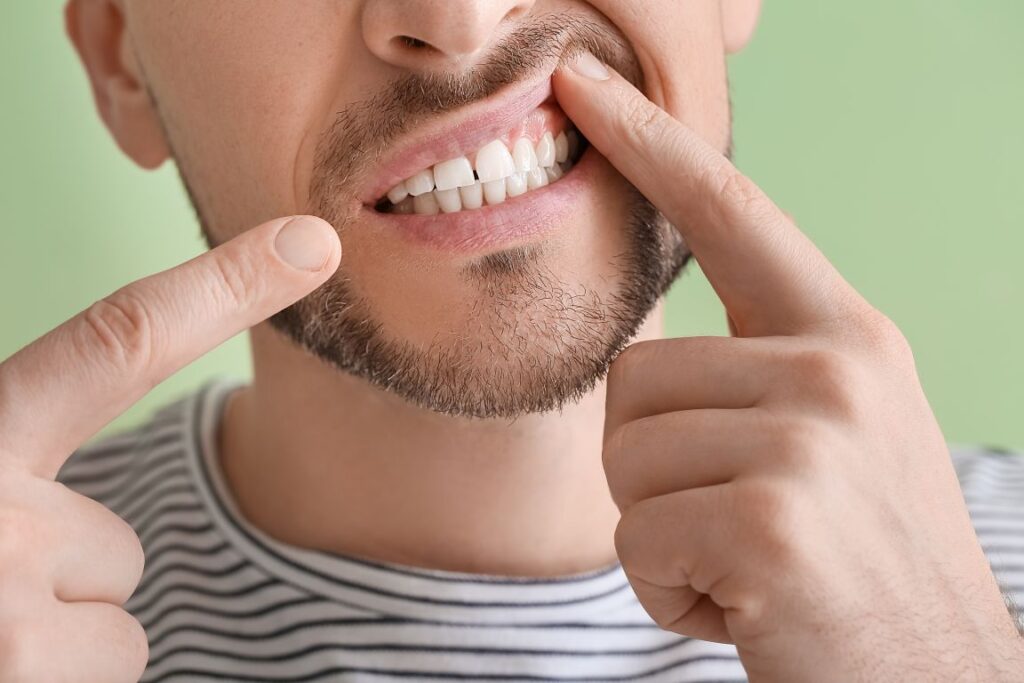
If you are suffering from receding gums due to periodontal disease, your teeth are at a greater risk of cavities, decay, and loss. One way to lower your risk of this happening and protect your smile is a procedure known as a gum graft. This treatment uses your own gum tissue from elsewhere in the mouth to cover the exposed roots of your teeth and keep them safe from further harm. Whether you’ve been scheduled to get a gum graft, or you’re simply curious about what this treatment entails, here’s a closer look at what you can expect during and after your procedure.
What Happens During a Gum Graft?
At your gum graft procedure, the first step your dentist will take is to numb your mouth. Once you are comfortable, your dentist may remove some tissue from a different area of the mouth, depending on which type of graft you need, or they may use freeze-dried human tissue from another source.
Are Gum Grafts Painful?
Because your mouth will be numbed with local anesthesia, you should not feel any pain during the procedure. However, once that has worn off, you are likely to experience some discomfort and swelling over the next few days or weeks. This can be easily controlled with prescription or OTC pain reliever. Your dentist may also prescribe you an antibiotic to help reduce your risk of developing an oral infection during the healing process and keep your grafted tissues healthy.
Recovering from a Gum Graft
Following your gum graft, you will want to modify your behaviors and diet temporarily until your tissues heal. Here are a few tips for a smooth recovery:
- You can control bleeding by placing gauze on either side of your surgical site, but not directly on top of it.
- Avoid physical activity for the first 24 hours after the procedure.
- Do not pull at your lips to try and see the wound.
- Do not touch the surgical site with your tongue or fingers.
- Don’t remove the dressing applied by your dentist.
- Use a mouth rinse as directed to keep bacteria at bay.
- Once you have resumed brushing your teeth, avoid brushing near the graft sites for a month. Once you resume, be very gentle and use a soft-bristled toothbrush.
In addition to following the after-care instructions, be sure to temporarily adjust your diet during this period as well:
- Eat a diet of soft foods such as mashed potatoes, yogurt, and soup.
- Eat plenty of soft fruits and vegetables.
- Do not drink alcohol, or eat anything spicy, salty, or acidic.
- Avoid anything that is hard, sticky, or crunchy.
- Avoid foods and beverages that are very hot or cold.
Remember, gum grafts are an excellent way to protect the roots of your teeth from damage caused by receding. The good news is that this procedure is very safe, and with proper aftercare is usually very successful. To speed up the healing process, be sure to follow the above tips, and soon you’ll have a healthy, pain-free smile to show for it!
About Our Practice
At Attleboro Dental Group, our team of highly skilled and caring dentists want to help you restore your healthy, beautiful smile. If you are suffering from receding gums, your smile could be at risk. To learn more about gum grafting, please schedule a consultation with us today by visiting our website or calling 774-331-0260.